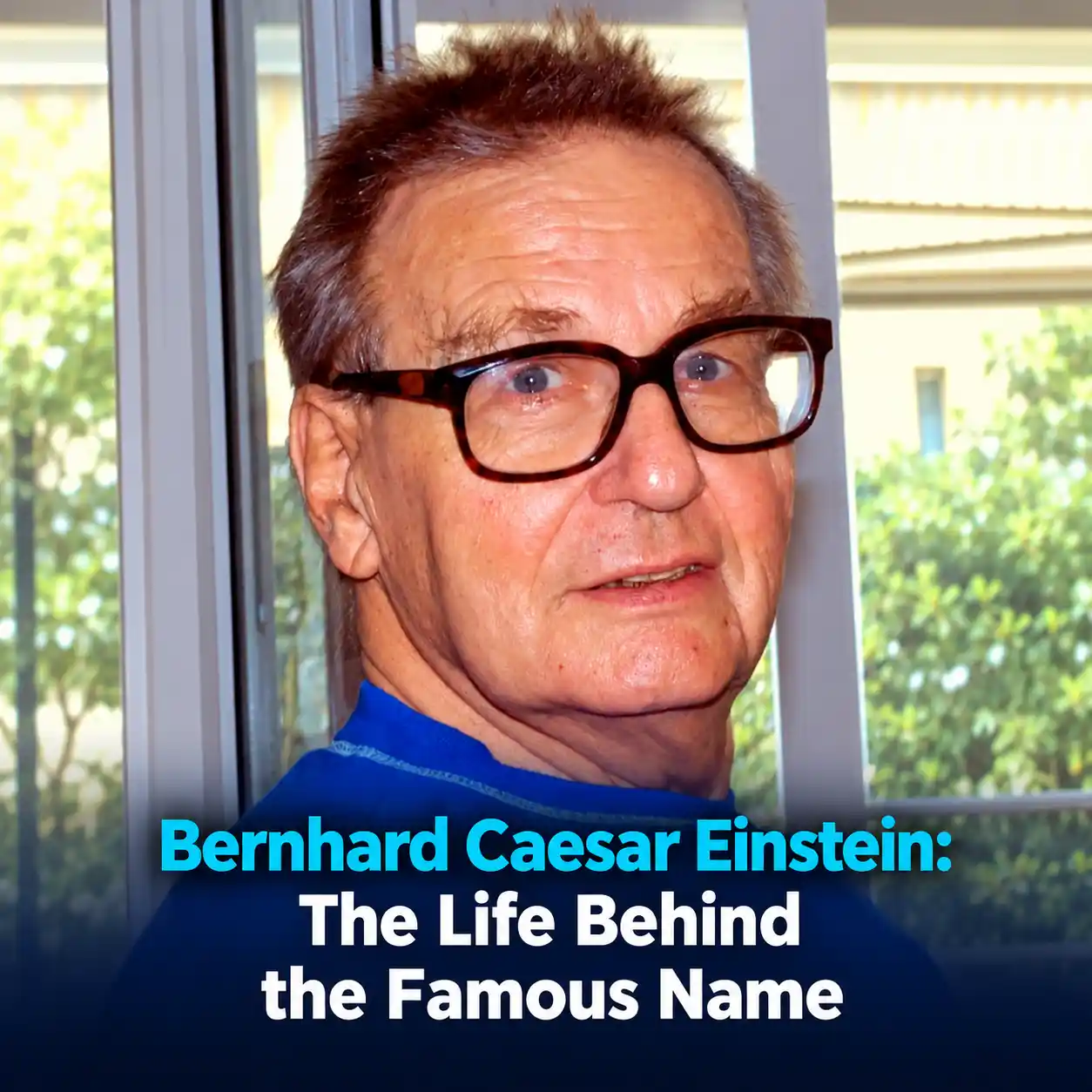
Bernhard Caesar Einstein was a Swiss-American engineer and the grandson of Albert Einstein. Born on July 10, 1930, he was the son of Hans Albert Einstein and Frieda Knecht. His work included inventions connected with light amplification and laser technology.
His surname draws attention, but his engineering records offer another reason to remember him. Patents name him as an inventor on practical technologies, giving his biography a story beyond his connection to a famous grandfather. His life also crossed several countries, from his birthplace in Germany to homes in the United States and Switzerland.
Bernhard died in Bern, Switzerland, on September 30, 2008, aged 78. His story brings together family history, scientific education, and work in industry.
Quick Facts
| Detail | Information |
|---|---|
| Full name | Bernhard Caesar Einstein |
| Name variation in records | Bernard Caesar Einstein |
| Date of birth | July 10, 1930 |
| Birthplace | Dortmund, Germany |
| Nationality | Swiss-American |
| Profession | Engineer; also described as a physicist |
| Parents | Hans Albert Einstein and Frieda Knecht |
| Paternal grandparents | Albert Einstein and Mileva Marić |
| First wife | Doris Aude Ascher |
| Later wife | Doris Schweizer |
| Children | Five |
| Date of death | September 30, 2008 |
| Place of death | Bern, Switzerland |
Early Life and Childhood
Bernhard was born in Dortmund, where his father worked on a bridge project. He spent part of his childhood in Switzerland before the family moved to America. His early years therefore connected him to both Europe and the United States.
According to An Einstein Encyclopedia, his family immigrated to America in 1938. They lived in South Carolina before moving to Pasadena in 1943 and Berkeley in 1947. These moves followed his father’s professional career.
Nationality
Bernhard Caesar Einstein is commonly described as Swiss-American. Germany was his birthplace, but it was only one part of his international background. His family ties, education, and working life also connected him closely to Switzerland and America.
Ethnicity and Family Ancestry
Through his paternal grandparents, Bernhard had German-Jewish and Serbian ancestry. Albert Einstein came from a German-Jewish family, while Mileva Marić was Serbian. This describes part of Bernhard’s ancestry rather than establishing his personal religious beliefs.
Nationality, ancestry, and religion should be kept separate. The available family history does not justify assigning Bernhard a religious identity based only on his grandfather’s background.
Age, Height, and Appearance
Bernhard lived from July 10, 1930, to September 30, 2008, making him 78 years old when he died. Reliable measurements of his height and weight were not found in the sources reviewed for this biography. Photographs alone cannot establish those measurements.
| Age and appearance detail | Information |
|---|---|
| Age at death | 78 |
| Birth date | July 10, 1930 |
| Death date | September 30, 2008 |
| Height and weight | Not reliably established in the sources reviewed |
Parents and Siblings
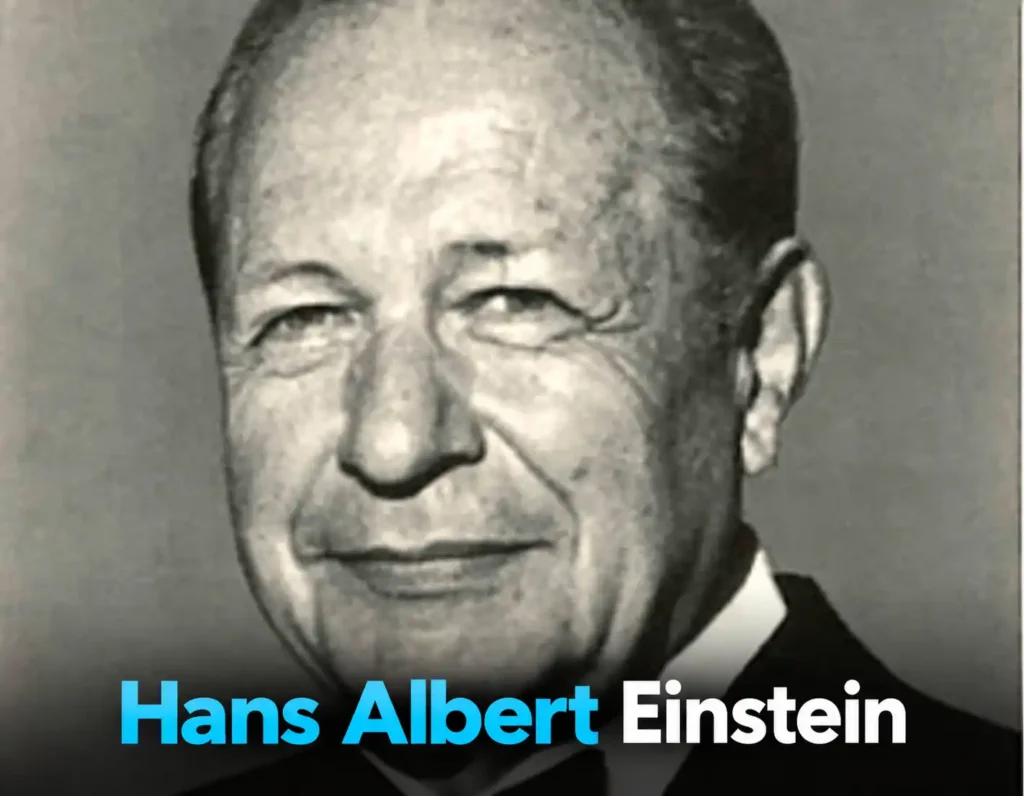
Bernhard’s father, Hans Albert Einstein, was a hydraulic engineer and a professor at the University of California, Berkeley. His mother was Frieda Knecht. The Leo Baeck Institute’s family records confirm their relationship to Bernhard and identify him as a physicist and engineer.
His family included his younger brother Klaus Martin Einstein and adopted sister Evelyn Einstein. Klaus died in childhood. Some family summaries also list an infant brother, David, but accounts differ in how they describe the siblings, so a complete sibling chronology requires further archival checking.
| Family member | Relationship |
|---|---|
| Hans Albert Einstein | Father |
| Frieda Knecht | Mother |
| Albert Einstein | Paternal grandfather |
| Mileva Marić | Paternal grandmother |
| Klaus Martin Einstein | Younger brother |
| Evelyn Einstein | Adopted sister |
Relationship with Albert Einstein
Bernhard knew Albert Einstein as a grandfather as well as a public figure. A 2005 report in The Independent records his memories of sailing and fishing with Albert. Those recollections give the biography a personal side that a list of scientific achievements would miss.
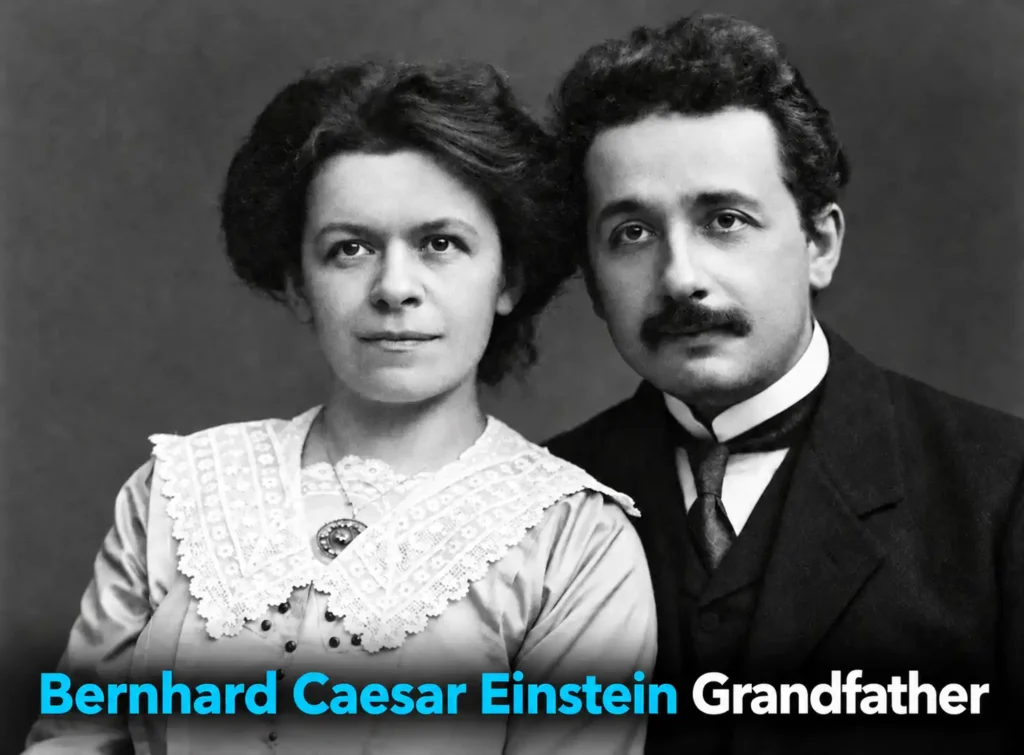
Music also connected the two generations. A contemporary 1955 Jewish Telegraphic Agency report on Albert’s will states that Bernhard was to receive his grandfather’s violin. The bequest is documented evidence of their connection; it should not be confused with ownership of Albert’s entire estate.
The violin offers a particularly useful detail because it is both personal and supported by a historical report. It helps explain why Bernhard’s place in the family involved more than carrying a famous surname.
Education and Military Service
An Einstein Encyclopedia reports that Bernhard attended UC Berkeley, left school, and joined the U.S. Army in 1954. He trained at Fort Ord, California, before serving in southern Germany. His time there also became part of his family story, as he married Aude Ascher that year.
After military service, he studied physics at ETH Zurich and obtained an undergraduate qualification, according to the same reference. His teachers included Wolfgang Pauli. Attendance at Berkeley should not be described as a completed Berkeley degree: the account reviewed places his completed qualification at ETH.
Engineering Career
Bernhard’s career involved applying scientific knowledge to devices and industrial processes. General biographies report that he worked at Texas Instruments after his studies. Patent records provide firmer evidence of his connections with Litton Systems and Lasag AG.
His Litton-linked work concerned microchannel plates, components used in image amplification. A separate Lasag patent concerns removing material with a laser. These records show different areas of engineering work without requiring exaggerated claims that he invented an entire field.
The family later returned to Switzerland. An ETH Zurich family archive places their settlement there in 1973, while several biographies give 1974. Describing the move as occurring in the early 1970s avoids presenting the disputed year as certain.
Patents and Technical Contributions
Patent records let readers see what Bernhard worked on in specific terms. Two examples illustrate his involvement in electronics and laser processing. They are examples checked for this biography, rather than a complete inventory of every patent associated with his name.
| U.S. patent | Inventor listing | Subject | Grant date |
|---|---|---|---|
| US5845189A | Bernard Caesar Einstein | Process for stabilizing a microchannel plate; originally assigned to Litton Systems | December 1, 1998 |
| US4220842A | Bernhard Einstein and Ekkehard Sturmer | Method of removing material from a workpiece; originally assigned to Lasag AG | September 2, 1980 |
The first patent describes treating a microchannel plate to stabilize its secondary-electron emission characteristics. Put simply, it addresses the behaviour of a component used to amplify signals in imaging devices. Its application was filed in 1973, despite the much later grant date.
The second describes a method using a pulsed infrared laser to remove material, particularly from metal. It names Bernhard alongside another inventor, so the contribution should be credited as joint work. Together, these examples provide a clearer account of his career than a general claim that he held “many inventions.”
Marriage and Relationships
Marriage to Doris Aude Ascher
Bernhard married Doris Aude Ascher in 1954. ETH Zurich’s Archive of Contemporary History confirms the marriage and their five children. It also records that Aude completed her medical studies after marrying and continued working as a doctor.
The archive places the family in America from 1960 to 1973, followed by a return to Switzerland. Their marriage later ended. Aude’s own career belongs in this history because she combined medical work with raising their family.
Later Marriage to Doris Schweizer
An Einstein Encyclopedia states that Bernhard married Doris Schweizer, a ceramic artist, in 1998. She and Doris Aude Ascher were different people. Their similar first names can cause confusion in short online biographies.
Children and the Next Einstein Generation
Bernhard and Aude had five children. Their names appear in published biographical accounts, while the number of children is independently supported by ETH’s family archive. This biography avoids assigning current jobs, locations, or personal circumstances to them without suitable evidence.
| Child | Name variation found in biographies |
|---|---|
| Thomas Martin Einstein | Thomas Einstein |
| Paul Michael Einstein | Paul Einstein |
| Eduard Albert Einstein | Ted Einstein |
| Mira Einstein-Yehieli | Mira Einstein |
| Charles Quincy Ascher Einstein | Charly Einstein |
Bernhard Caesar Einstein Net Worth
Bernhard Caesar Einstein’s net worth is not reliably established in the sources reviewed. His engineering work and patent credits do not reveal his personal wealth. A patent assigned to a company also does not, by itself, establish how much its inventor earned.
| Financial detail | What is documented |
|---|---|
| Personal net worth | No dependable figure found |
| Salary and patent income | Not established |
| Inheritance from Albert Einstein | A violin bequest appears in contemporary reporting |
Death and Cause of Death
Bernhard died in Bern, Switzerland, on September 30, 2008, at 78. An Einstein Encyclopedia, by Alice Calaprice, Daniel Kennefick, and Robert Schulmann, reports vascular disease and renal failure as the causes of death. This account should remain attributed to the book rather than presented as information taken from a death certificate.
Vascular disease concerns blood vessels, while renal failure means kidney failure. Those terms do not establish the full sequence of his final illness, which the material reviewed does not explain.
Obituary and Remembrance
A contemporaneous newspaper obituary or family death notice was not located during this research. This section is therefore a retrospective remembrance, rather than a reproduction of an original obituary. Unverified funeral details, burial information, and family statements are omitted.
Bernhard is remembered through his family connections and the technical records of his working life. His patent credits preserve evidence of engineering contributions, while the violin bequest adds a personal link to his grandfather. Together, they offer a grounded picture of a life that extended beyond the Einstein name.
Wikipedia and Public Records
Bernhard has a Wikipedia biography, but parts of its education and career section carry a sourcing warning. It is a useful starting point rather than sufficient evidence for every claim. Patent documents and institutional records provide more direct support for specific parts of his story.
The ETH Zurich Ascher-Schütz family archive summary is particularly useful for his first marriage and family life. Other sources used here include the Leo Baeck Institute, U.S. patent records, contemporary reporting, and An Einstein Encyclopedia (Princeton University Press, 2015, pp. 57–58; consulted through an online reproduction).
Legacy and Contributions
The clearest way to understand Bernhard’s professional legacy is to look at the work recorded under his own name. His patents concern practical questions about imaging components and laser processing. That gives readers a specific basis for discussing his achievements.
His family history adds another dimension: a childhood across countries, two marriages, five children, and personal memories of Albert. Both parts belong in his biography. Neither needs unsupported claims about exceptional wealth or a measured IQ to make his life worth understanding.
Frequently Asked Questions
How was Bernhard Caesar Einstein related to Albert Einstein?
He was Albert Einstein’s grandson through Hans Albert Einstein. His paternal grandmother was Mileva Marić.
What did Bernhard Caesar Einstein invent?
Records name him on patents concerning microchannel plate stabilization and laser material removal. These are specific contributions; they do not mean he invented night vision or lasers as a whole.
Who was Bernhard Caesar Einstein’s wife?
He married Doris Aude Ascher in 1954. An Einstein Encyclopedia records a later marriage to Doris Schweizer in 1998.
How many children did he have?
He and Aude had five children: Thomas, Paul, Eduard, Mira, and Charles.
When did Bernhard Caesar Einstein die?
He died on September 30, 2008, in Bern, Switzerland, aged 78.
What was his cause of death?
An Einstein Encyclopedia reports vascular disease and renal failure. A death certificate was not consulted for this article.
Final Thoughts
Bernhard Caesar Einstein’s biography is strongest when it gives attention to both his family and his own work. Being Albert Einstein’s grandson explains much of the public interest, while his engineering records show what he contributed himself. His story becomes clearer through specific facts: the devices he worked on, the family he raised, and the personal connection preserved in his grandfather’s violin.

One thought on “Bernhard Caesar Einstein: The Life Behind the Famous Name”